
Toyota Camry Hybrid Maintenance Schedule: Every Mileage Explained
Learn what your Toyota Camry Hybrid actually needs at every service interval, what can wear out over time, and how proper maintenance can help your hybrid last well beyond 200,000 miles.
The Toyota Camry Hybrid is one of the most dependable hybrid sedans on the road. Many owners drive them well past 200,000 miles with few major repairs—but that reliability isn't automatic. Following Toyota's maintenance schedule helps protect both the gasoline engine and hybrid system while keeping fuel economy, performance, and long-term repair costs in check.
Whether your Camry Hybrid is brand new or has over 150,000 miles, here's what to expect throughout its life.
What Makes the Camry Hybrid Different?
Many people assume hybrid vehicles require significantly more maintenance than traditional cars. In reality, the opposite is often true.
The Toyota Camry Hybrid uses regenerative braking, which helps recharge the hybrid battery while slowing the vehicle. Because the electric motor assists with braking, brake pads often last much longer than they do on a conventional gasoline-powered vehicle.
While routine maintenance is very similar to a standard Camry, hybrid models include additional components—such as the hybrid battery and cooling system—that should be inspected by technicians familiar with Toyota hybrid technology.
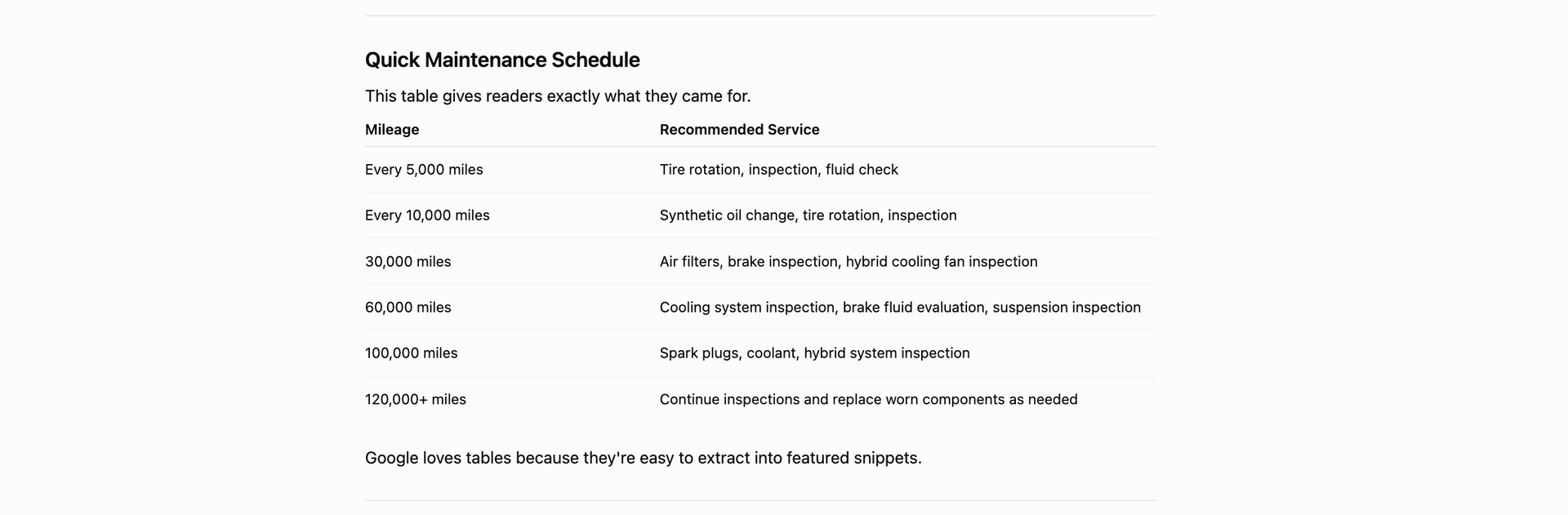
Every 5,000–10,000 Miles
These are your routine maintenance visits and are the foundation of keeping your Camry Hybrid reliable.
Services typically include:
- Tire rotation
- Synthetic oil and filter change (typically every 10,000 miles under normal driving conditions)
- Brake inspection
- Fluid level inspection
- Steering and suspension inspection
- Multi-point vehicle inspection
Keeping up with these services helps maximize fuel economy, extend tire life, and catch small issues before they become expensive repairs.
Every 30,000–60,000 Miles
As your vehicle accumulates mileage, a few additional maintenance items become important.
Common services include:
- Replace engine air filter
- Replace cabin air filter
- Inspect brake fluid
- Inspect cooling system
- Inspect steering and suspension
- Inspect the hybrid battery cooling fan
Why the Hybrid Battery Cooling Fan Matters
One maintenance item that's often overlooked is the hybrid battery cooling fan.
Over time, dust, lint, and pet hair can restrict airflow through the fan, causing the hybrid battery to operate at higher temperatures. Regular inspections and cleaning—especially if you drive with pets—can help improve battery cooling and support long-term hybrid battery performance.
Every 100,000 Miles and Beyond
Reaching 100,000 miles is a major milestone, but it's far from the end of your Camry Hybrid's life.
Depending on your model year, recommended maintenance may include:
- Spark plug replacement
- Engine coolant service
- Hybrid system inspection
- Water pump inspection
- Cooling system inspection
- Suspension inspection
Many Toyota Camry Hybrids continue to provide dependable transportation well past 200,000 miles when properly maintained.
Signs Your Camry Hybrid May Need Service Early
Even if you haven't reached your next scheduled maintenance interval, don't ignore these warning signs:
- Dashboard warning lights
- Decreased fuel economy
- Unusual engine or suspension noises
- Fluid leaks
- Brake vibration
- Reduced hybrid performance
- Air conditioning not cooling properly
Addressing these issues early can often prevent larger, more expensive repairs.
Why Choose a Toyota Hybrid Specialist?
Hybrid vehicles contain advanced electrical systems that require specialized knowledge and equipment. Choosing a shop experienced with Toyota hybrids means your vehicle is inspected by technicians who understand:
- Hybrid battery systems
- High-voltage components
- Regenerative braking
- Hybrid cooling systems
- Toyota factory diagnostics
Whether it's routine maintenance or diagnosing a hybrid warning light, working with experienced hybrid technicians can help ensure accurate repairs and long-term reliability.
Schedule Your Toyota Camry Hybrid Service in Lexington, SC
Whether your Toyota Camry Hybrid has 25,000 miles or 225,000 miles, routine maintenance is one of the best investments you can make in your vehicle.
At Turnage Auto Care, we specialize in Toyota, Lexus, and hybrid vehicles. From oil changes and factory-scheduled maintenance to hybrid diagnostics and repairs, our team is here to help keep your Camry Hybrid performing at its best.
If your Camry Hybrid is due for service or you're unsure what maintenance it needs, contact us today to schedule an appointment.